
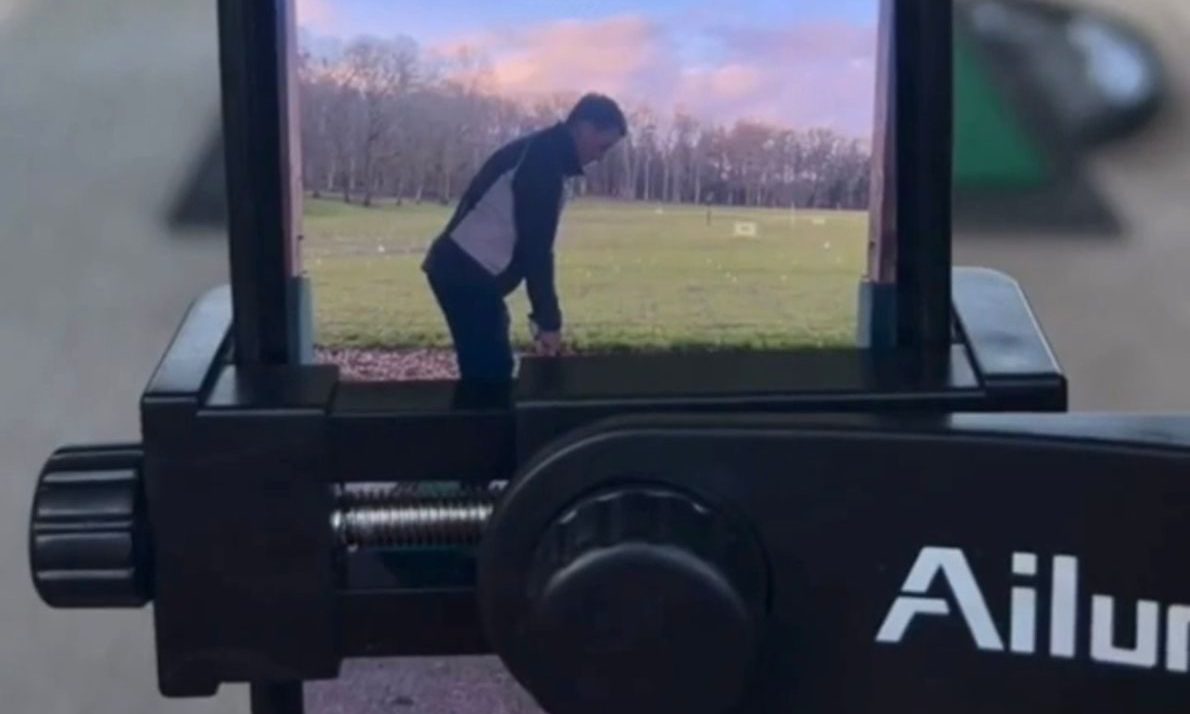
Video is one of the most powerful tools golfers can use to make meaningful improvements to their golf swing — but only if it’s used in the right way.
One of the most common mistakes I see is this:
A golfer makes a swing, immediately looks at the video, and then judges the swing purely on what they see.
On top of that, there’s a very popular message in golf instruction around “feel versus real” — and that message is absolutely correct. What you feel you’re doing and what you’re actually doing can be very different, and video can be brilliant at confirming that.
Where golfers often go wrong is how they use video during training.
Exaggeration Isn’t the Goal — Tuning In Is
When you’re training a new movement or swing pattern, it’s not just about exaggerating the feel and hoping it sticks.
Yes, exaggeration can be useful — and I will often use what I call Goldilocks practice:
- One swing where you do it too much
- One swing where you do it not enough
- Then finding the middle ground that’s “just right”
But good practice isn’t just exaggeration.
It’s about tuning — tuning where you want to be from where you are right now, using whichever strategy helps you get there.
Step 1: Know Exactly What You’re Trying to Change
Before you press record, you must be clear on your intention.
Ask yourself:
- Am I trying to change left arm position?
- Hand depth?
- Club position at the top?
- Body turn?
- Shaft plane?
Some simple examples most club golfers can relate to:
- Is the club laid off or across the line at the top?
- Is the shaft too steep, too shallow, or where I want it at P3?
- Are my hands too deep, too high, or in the right place at P3
You don’t need to look at everything.
Shine a light on something specific.
Step 2: Rate the Swing on Feel (Not Ball Flight)
Make a swing — you may or may not video every swing — but after each one, rate it out of 10 based on how well you executed the movement, not the result.
- 10/10: You absolutely nailed the movement you were training
- 8/10: Very close, but not quite there
- 6/10 or below: Missed the movement to some degree
REMEMBER: This rating has nothing to do with strike or ball flight.
A Crucial Detour: Strike Is Not the Same as Swing Quality
Most golfers judge their swing like this:
- Good strike = good swing
- Bad strike = bad swing
That’s simply not true.
Two swings can be technically very similar:
- One just happened to coordinate the club to the ball better
- The other didn’t
When you’re making swing changes, you must detach from outcome.
Strike and ball flight should be a secondary or even tertiary reference, not the main one.
Step 3: Reinforce What You Did Well
If you rate a swing 8, 9, or 10 out of 10:
- Reinforce what you did well
- Reinforce what it felt like
- Reinforce what you did before the swing that helped it happen
If you rate it 4, 5, 6, or 7:
Ask small, constructive questions:
- What would I need to feel to get this from a 6 to an 8?
- What could I do to get this from a 4 to a 6?
You’re not looking for massive changes or ‘perfect’— just small improvements, even if the feeling feels huge.
Step 4: Use Video to Validate Your Feel
This is where video becomes powerful.
After rating the swing, then look at the video and ask:
- Was my rating accurate?
- Did what I felt match what I see?
The goal is to align perception with reality.
As this improves:
- You start to trust your feelings more
- Your feedback loop becomes faster
- You rely less on constantly checking the screen
Early on, the feelings may be massively exaggerated — and that’s okay.
Often what feels extreme looks like a very small change on video.
Video gives you permission to keep trusting that uncomfortable, exaggerated feel because you can see it’s moving you in the right direction.
Two Big Problems With How Golfers Use Video
- They focus on how they look, not how effectively the club is moving around their body
- They have no clear intention, no self-rating, and no validation loop — so nothing sticks
Without intention, feedback, and validation, it’s very hard to:
- Embed the feeling
- Own the movement
- Transfer it from range to course
The Bottom Line
Video is incredibly powerful — but only if you use it with purpose.
Make the swing.
Rate the feel.
Then use video to confirm whether your perception matches reality.
Do this well and video becomes a tool for real, lasting change.
Do it poorly and it simply creates a false confidence on the driving range.
Mark Day
PGA Teaching Professional


